
Freeze the configuration used for the quotation
Ask the seller to state the VIN when available, production date, original model code and configuration name. Retain a dated copy of the manufacturer table used in the comparison, including column headings and footnotes. Do not accept a cropped feature row without the variant to which it belongs. If the car is not yet individually identified, describe the quotation as a configuration proposal and require confirmation before allocation. Keep option packages, dealer accessories and aftermarket installations in separate columns so that a long feature list cannot conceal an unspecified base version.
Match facelift appearance without treating it as identity
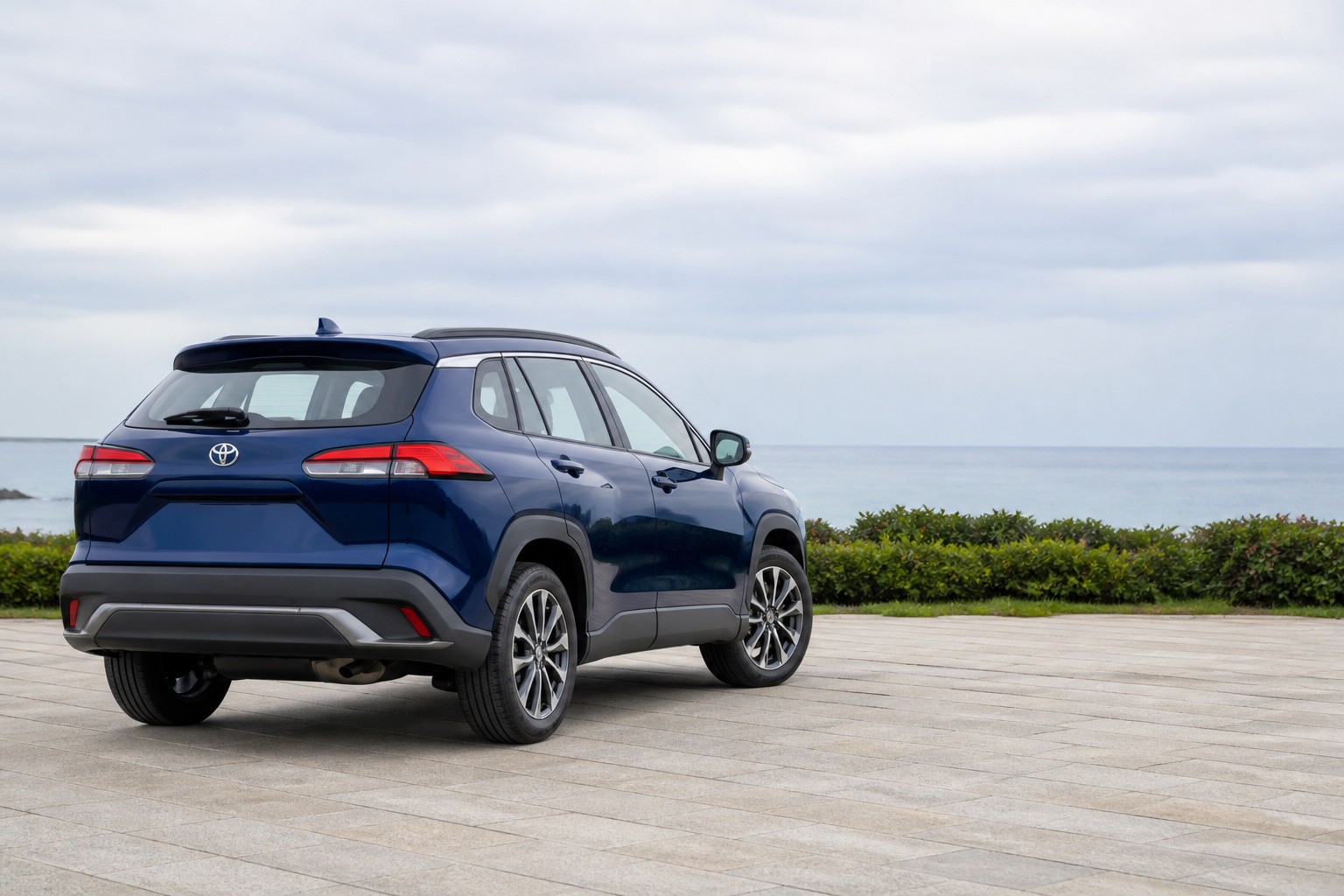
Compare photographs of the front, rear, lamps, wheels and cabin with the selected production record. Appearance helps identify discrepancies but is not a substitute for the manufacturing label. Replacement panels, body kits and promotional photographs can make an earlier car look current. Use the model-year identity guide to reconcile conflicting dates and labels. Do not reject a documented vehicle simply because another country’s Corolla Cross has a different grille; market-specific styling exists. Equally, do not convert resemblance into a claim that the two markets share every fitted component.
Read gasoline and hybrid columns independently
Separate the gasoline and intelligent-hybrid configuration columns before comparing fuel figures, transmission descriptions or operating equipment. Avoid combining a value from one powertrain with a feature from another. The powertrain choice guide places this distinction in the buyer’s route and support context. Ask for the engine and hybrid-system identity applicable to the candidate, not a general headline about Toyota technology. Numerical comparisons should preserve test cycle, units and publication scope; a laboratory consumption figure is neither a personal-use prediction nor a condition test.
Verify driver-assistance equipment physically
The current table uses manufacturer-specific assistance descriptions. Do not translate those names into a promise of autonomous driving or export-market equivalence. Identify installed cameras, sensors, controls and relevant software, then check supported functions through safe professional procedures. The assistance and calibration checks explain evidence following glass, body or alignment work. A listing’s assistance badge is not a calibration certificate. Availability, road conditions, software region and local rules can affect use, so any destination claim needs its own support rather than a copied domestic marketing sentence.
Check displays and connected functions as separate systems
Request readable photographs and a demonstration of instrument controls, multimedia settings, phone compatibility and any claimed connected feature. Follow the dashboard checks for driver-critical messages. Language, account access, mapping and data services are not guaranteed by a large screen or recent production date. Establish what operates offline and what requires a China-market account or subscription. Record unsupported destination features as limitations before price comparison. Do not install unofficial firmware merely to satisfy an English-language promise without documented compatibility, provenance and recovery options.
Distinguish new production from unused stored stock
Ask whether the proposed vehicle is newly manufactured, unregistered stored stock, dealer demonstration or previously registered. These are different condition and documentation routes even if the odometer is low. Apply the storage and recommissioning checks to tyres, auxiliary battery, fuel, fluids and moisture exposure where appropriate. A current-model label does not prove recent manufacture. Agree the inspection date and preparation responsibility, and photograph transport damage before cosmetic correction. Any first-use or warranty statement must come from the issuing market’s actual terms rather than an assumption based on the word new.
Require a final equipment acceptance record
Before loading, compare the supplied VIN and hardware with the original request. Record substitutions, missing accessories, keys, tyre sizes, control language and agreed preparation. If the seller changes the configuration, obtain the buyer’s acceptance after explaining the practical consequences; do not silently substitute a cheaper grade. Keep the quotation, equipment evidence and loading file together so the destination workshop can identify the car without guessing from an English trim translation. Acceptance should leave support, conformity and registration questions separate from the manufacturer’s domestic equipment table.
Buyer checklist
- Keep the configuration column and footnotes.
- Verify production identity independently of styling.
- Separate gasoline and hybrid specifications.
- Test assistance and regional functions without overpromising.
Questions and answers
Does a 2026 badge prove every current feature is fitted?
No. Match the actual grade and production record, then verify the installed equipment.
Can a China-market assistance name be treated as a global feature guarantee?
No. Confirm hardware, software, supported operation and destination limitations for the actual car.
Reference information
Use the applicable market and year documentation for equipment and operating limits. The references have their own market and publication scope; they do not establish the condition, fitted equipment or destination approval of an individual vehicle.
Continue with the Frontlander specification verification, or send your vehicle requirements.